AC Repair in the Niagara Region
Fast diagnosis and repair for air conditioners that will not cool, will not start, or keep shutting off, with upfront quotes across the Niagara Region.
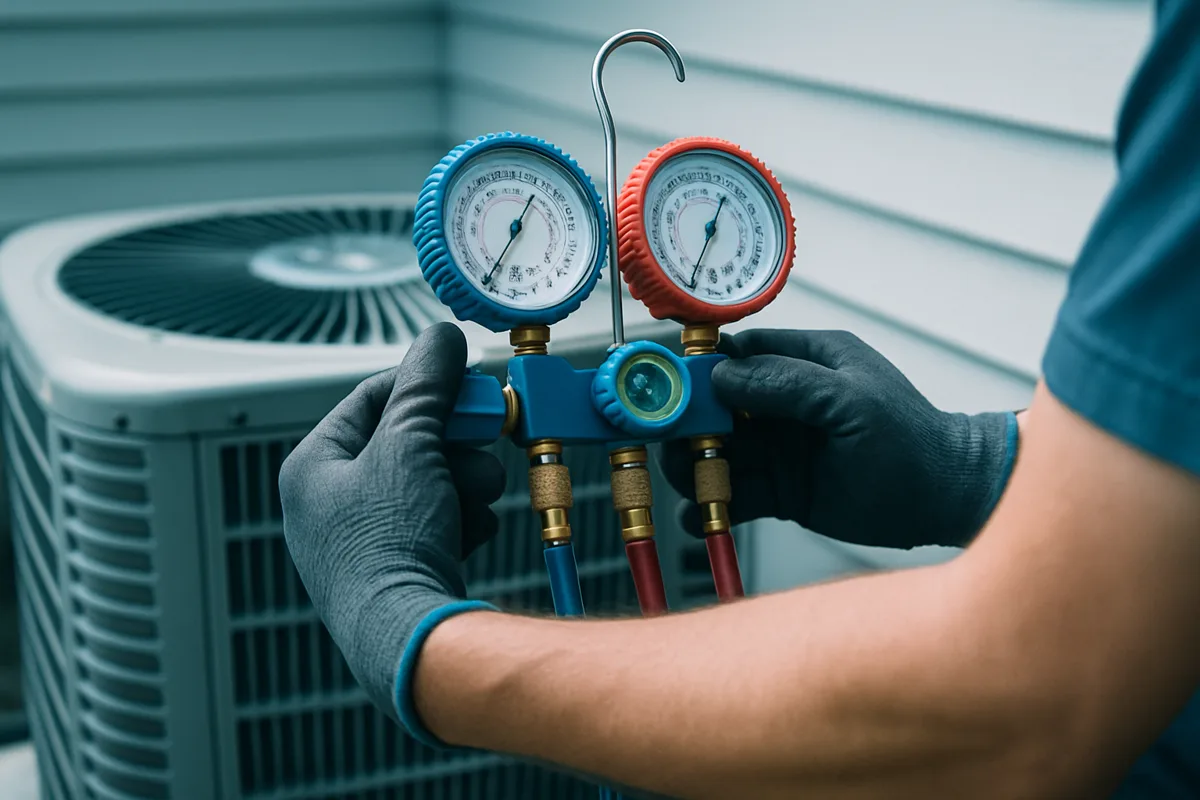
It is usually the first real humid stretch of the year that does it. Late June, the humidex pushes past 35, the air conditioner has been running since breakfast, and by supper the house is 27 degrees and climbing. The outdoor unit is either silent or roaring with nothing cold coming out of the vents. If that is where you are right now, the short version is this: call (289) 302-8984, we will give you an honest arrival window, and you will know what is wrong and what it costs before any repair starts.
AC Repair Niagara diagnoses and repairs central air conditioners, ductless mini-splits, and heat pumps in cooling mode across St. Catharines, Niagara Falls, Welland, Fort Erie, and Thorold. Same-day service is available most days through cooling season, seven days a week from 7am to 9pm.
Signs your air conditioner needs repair
Most air conditioners give warning before they quit. Catching these early usually means a smaller bill and a shorter wait.
Warm air from the vents
The fan runs, air moves, but it is not cold. This is the most common call we get and it has the widest range of causes: a filter so clogged the evaporator coil has frozen, a condenser fan that has stopped, a refrigerant leak, or a compressor that is no longer pumping. The order in which a technician checks these matters, because a frozen coil from a dirty filter looks a lot like low refrigerant if you only glance at the gauges.
Short cycling
The unit runs a couple of minutes, shuts off, and restarts a few minutes later. This wears out the compressor and contactor fast. Causes range from an oversized system (common in newer subdivisions where builders sized by square footage rather than actual load) to a failing capacitor, a dirty coil, or a thermostat on a wall that gets afternoon sun.
Ice on the refrigerant lines
Frost or a sleeve of ice on the copper line running into the house means the evaporator coil is running colder than it should. Restricted airflow or low refrigerant charge are the usual culprits. Turn the cooling off and let the fan run to thaw it, then call. Running it iced up can slug liquid refrigerant back to the compressor.
Breaker trips or humming without starting
A loud hum from the outdoor unit with no fan movement often points to a failed run capacitor, one of the cheapest and quickest repairs in the trade. A breaker that trips every time the condenser tries to start is a different story and needs a proper amp draw test rather than another reset.
Water where it should not be
A puddle at the base of the furnace or air handler in summer usually means a clogged condensate drain or a cracked drain pan. In finished basements across Niagara this is the fault that does the most collateral damage, because it soaks flooring before anyone notices.
Rising hydro bills with no change in habits
Longer run times to hold the same temperature mean something is dragging efficiency down. Dirty coils, a weak capacitor, or a slow leak show up on the bill months before they show up as a breakdown.
Repair, or start thinking about replacement
We fix what can sensibly be fixed. But we will also tell you when a repair is throwing money at equipment that is on its way out. The honest trade-offs:
- Common electrical parts (capacitor, contactor, relay, fan motor): repair, almost always, regardless of age. These are the wear parts of the system.
- Refrigerant leaks: repair if the leak is at a fitting or a Schrader valve. Think hard if the leak is inside the evaporator coil on a unit older than 10 years, because coil replacement plus refrigerant on an R-410A system adds up.
- Compressor failure: repair on a unit under warranty, otherwise this is usually the point where replacement wins.
- Age plus refrigerant: new residential AC and heat pump equipment made for Canada moved off R-410A at the start of 2025 in favour of lower-GWP refrigerants like R-454B and R-32. R-410A is still available for servicing existing systems, but supply is tightening over time and that affects the cost of big refrigerant repairs on old equipment.
If your unit is at the end of its life and you are weighing options, we will talk you through whether a straight AC or a heat pump is the better fit for how your house is heated. If the cooling failure is the middle of a heat warning, start with our emergency AC repair service instead.
How an AC repair visit works
- You call or book online. Tell us the symptom, the equipment type if you know it, and whether anyone in the house is vulnerable to heat. That last part changes how we prioritize.
- We give you a real arrival window. Not “sometime today.” During a heat wave we will tell you if we are backed up rather than leave you waiting by the door.
- Diagnosis. The technician checks the thermostat and filter first, then the indoor coil and blower, then the outdoor unit: capacitor, contactor, fan, compressor amp draw, and refrigerant pressures and temperatures. We do not guess from one reading.
- Upfront quote. You get the fault in plain language and a fixed price for the repair before anything is replaced. If the sensible call is to not repair, we say so.
- The repair. Most common faults are fixed on the first visit from truck stock. Coil, compressor, or specialty parts may need a return trip; we tell you the timeline when we quote.
- Test and hand-off. The system runs through a full cooling cycle, we check the temperature split across the coil, and you get a summary of what was done and anything worth watching.
What you get from a proper repair
- Cooling back the same day for most faults, because capacitors, contactors, fan motors, and drain parts are on the truck.
- A fix, not a top-up. Refrigerant is added only after a leak is found and repaired, or after we have explained why a top-up is the pragmatic choice on a unit you plan to replace.
- A price you agreed to before the work started.
- A straight answer on lifespan so you can plan a replacement on your schedule rather than during the next heat warning.
What affects the cost of an AC repair
- The part. A capacitor is inexpensive; a compressor, evaporator coil, or ECM blower motor is not.
- Refrigerant type and quantity. R-410A costs more than it did a few years ago, and older R-22 systems are effectively at the point where a refrigerant repair is not worth doing.
- Warranty status. Many manufacturers cover the compressor for 10 years when the unit was registered at installation. Ask us to check; it can turn a large repair into a labour-only one.
- Access. A condenser buried behind a cedar hedge or an air handler in a crawlspace takes longer.
- Timing. A weekday morning booking is cheaper to schedule than an after-hours call during a heat warning.
- Electrical work on the house side. If the fault is a tired breaker or undersized disconnect rather than the AC itself, that is a licensed electrician’s job and may involve an Electrical Safety Authority notification.
You will always have the number in hand before we touch anything.
What Niagara AC repair has to account for
Air conditioners fail differently here than they do in a drier part of the province. A few local patterns shape how we diagnose.
Lake humidity and long, muggy nights
Niagara sits between Lake Ontario and Lake Erie, and summer air here carries a lot of moisture. Environment Canada issues heat warnings for southern Ontario when daytime highs are expected to reach 31 degrees with overnight lows staying at 20 or above for two days, or when the humidex is forecast to hit 40. Those warm nights matter for AC: the system never gets a rest, condensate drains run constantly, and a marginal drain line or a slightly low charge shows up fast.
Cottonwood and pollen on the condenser
Every June, cottonwood fluff blankets neighbourhoods near the creeks and the canal. It packs into condenser fins like felt, the coil cannot shed heat, head pressure climbs, and the compressor works harder for less cooling. A high percentage of “not cooling well” calls in early summer are a clogged outdoor coil. We clean it properly as part of the repair and recommend a spring tune-up if your unit sits near mature trees.
Older electrical in century homes and postwar bungalows
Downtown St. Catharines, the older streets of Niagara Falls near Lundy’s Lane and Stamford, Welland’s older east side, and Fort Erie’s Bridgeburg core all have plenty of homes with original or once-updated panels. A weak breaker, a fused disconnect with corroded contacts, or a branch circuit that was fine for a 1990s condenser but marginal for the one installed later can all present as an “AC problem.” We test on the equipment side and tell you plainly when the fix belongs to an electrician.
Ductless mini-splits in homes without ductwork
Thousands of Niagara homes were built with radiators or baseboard heat and never had ducts, so ductless mini-splits are common in postwar bungalows and older two-storeys. Mini-split faults tend to be drainage (the condensate pump or gravity drain on the indoor head), communication errors between head and outdoor unit, or refrigerant leaks at flare fittings that were not torqued properly at installation. We service them; it is not a specialty add-on.
Refrigerant rules and who is allowed to touch them
In Ontario, anyone handling refrigerant needs the Ozone Depletion Prevention card under Ontario Regulation 463/10, and residential AC work falls under the compulsory trades administered by Skilled Trades Ontario (313A Refrigeration and Air Conditioning Systems Mechanic, or the residential-only 313D). Gas-fired equipment on the heating side is TSSA territory. Ask any company who is coming to your house what they hold; a legitimate technician will not be offended.
Permits and paperwork
A like-for-like repair does not require a permit. Replacing the outdoor unit or the full system can trigger municipal and utility paperwork depending on the municipality, and any new electrical circuit or disconnect needs to go through a licensed electrical contractor with the proper ESA notification. If you are moving from AC to a heat pump, Ontario’s Home Renovation Savings program (run by Save on Energy and Enbridge Gas) currently offers heat pump rebates, but it requires a participating contractor and written pre-approval before the installation happens, so raise it before the equipment is ordered rather than after.
Get cool air back today
If your air conditioner is blowing warm, short cycling, iced up, or simply dead, do not wait for the weekend to see if it sorts itself out. It will not, and the next heat warning is when everyone else calls too. Phone (289) 302-8984 for a same-day diagnostic with an upfront quote, or book a visit online and we will confirm your arrival window. We serve every neighbourhood in St. Catharines, Niagara Falls, Welland, Fort Erie, and Thorold.
How It Works
Call or Book Online
Tell us what your air conditioner is doing. We ask a few quick questions, schedule a visit, and a technician arrives with the common parts for your type of system.
Diagnosis & Upfront Quote
The technician tests the system, finds the actual fault, and explains it in plain language. You get a clear quote for the repair before any work starts.
The Repair
Once you approve the quote, the repair is done on the spot whenever parts allow. If a part has to be ordered, you get a firm timeline before we leave.
Verify & Maintenance Advice
We run the system through a full cooling cycle to confirm the fix, then walk you through simple maintenance habits that help you avoid the next breakdown.
Frequently Asked Questions
Should I repair my air conditioner or replace it?
A useful rule of thumb: if your AC is more than 10 to 12 years old and facing a major repair such as a compressor or coil, replacement is often the smarter long-term spend. If the unit is younger and the fault is a common part like a capacitor, contactor, or fan motor, a repair usually makes far more sense. We walk you through both options with real numbers for your system and let you decide.
Why is my AC running but not cooling the house?
The usual suspects are a clogged air filter, a dirty outdoor condenser coil, a refrigerant leak, or a failed component such as a capacitor or compressor. Sometimes the outdoor unit has stopped entirely while the indoor fan keeps blowing warm air. A proper diagnosis checks each of these in order so you only pay to fix the actual fault.
What does an AC diagnostic visit cost in Ontario?
Most HVAC companies in Ontario charge a diagnostic or service call fee that covers the technician's trip and the time to test the system, and many put that fee toward the repair if you go ahead. We quote our current diagnostic fee when you book and give you an upfront price for the repair before any work starts.
How fast can you actually get here for a same-day repair?
Call before mid-afternoon and we can usually get a technician out the same day, with no-cooling calls treated as the priority. During a region-wide heat wave, demand spikes for every company in Niagara, so we give you an honest arrival window when you book instead of a promise we cannot keep.
My AC uses R-410A refrigerant. Is that a problem?
Not at all for repairs. R-410A remains the most common refrigerant in Canadian home air conditioners and is still available for servicing existing systems, even as new equipment moves to newer refrigerants. If your system has a leak, the right fix is to find and repair the leak first, since simply topping up refrigerant treats the symptom and not the cause.
When is a heat pump the better replacement choice?
If your air conditioner is due for replacement anyway, a heat pump is worth a serious look: it cools exactly like an AC in summer and also provides efficient heating for much of the Niagara shoulder season. Homes heated with electricity or oil tend to see the biggest benefit, and federal or provincial rebate programs can change the math, so check what is available before you decide.
Why does my air conditioner keep tripping the breaker?
A condenser that trips the breaker on startup usually has a weak capacitor, a compressor drawing too much current, or a short in the wiring or contactor. In older Niagara homes the breaker itself can be tired. Do not keep resetting it; each restart under a fault stresses the compressor, which is the most expensive part in the system.
Is it worth repairing a 15-year-old air conditioner?
It depends on the fault. A capacitor or contactor on a 15-year-old unit is a cheap repair that can buy a few more summers. A compressor or evaporator coil on the same unit usually is not, because you would be putting a large sum into equipment that is near the end of its life and uses a refrigerant that is getting more expensive. We give you both prices and our honest read.